Key takeaway: A smoke damage insurance claim usually goes better when you report the loss quickly, document everything, and protect your home from more damage. What gets paid depends on your policy, so read it and talk to your insurer or agent.
Smoke Damage Insurance Claim: Where to Start
A fire, even a small one, is frightening. Once the flames are out, you are left with soot, odor, and a long list of questions about your smoke damage insurance claim.
This guide explains what homeowners insurance smoke damage coverage usually includes, what insurers often deny, and what to do in the first 48 hours. You will also learn how professional smoke damage restoration fits into the process.
This article is general information only. It is not legal or insurance advice, and every policy is different.
Need help right now? Call now for 24/7 help at 931-416-5131.
What Smoke Damage Looks Like
Some smoke damage is easy to spot. Other damage hides where you cannot see it. Both types matter for your claim.
Visible Damage
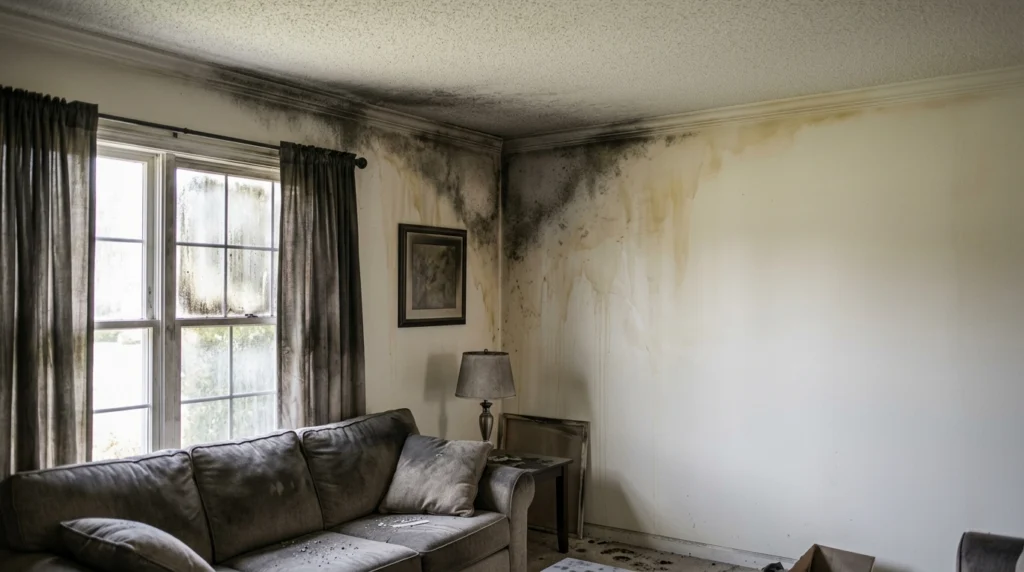
- Black or gray soot on walls, ceilings, and furniture
- Yellow or brown stains on paint and trim
- Greasy, sticky film on surfaces after a kitchen fire
- Discolored or warped materials near the heat source
Hidden Damage
- Smoke odor trapped inside walls and ceilings
- Soot inside your HVAC system and ductwork
- Smoke absorbed by insulation, carpet padding, and upholstery
- Residue in closed rooms far from the fire
Smoke travels through vents, gaps, and wall cavities. A fire in one room can leave odor in the whole house.
Soot is also acidic. The longer it sits, the more it can stain and corrode surfaces. Fast soot cleanup often protects more of your belongings.
What Your Homeowners Policy Usually Covers
Many homeowners policies cover sudden fire and smoke damage. The details depend on your policy, your coverage limits, and your deductible. The examples below are general, not a promise of coverage.
- Structure cleaning and repair: Cleaning, repairing, or replacing walls, flooring, ceilings, and other parts of the home.
- Personal belongings: Furniture, clothing, electronics, and other items damaged by smoke or fire, often with limits on certain categories.
- Additional living expenses: Costs such as a hotel or short-term rental if your home is not safe to live in while repairs are done.
- Smoke odor removal: Many policies treat odor removal as part of a covered fire loss, but wording varies.
Fire damage insurance can also be affected by the cause of the fire. If lightning or high winds started it, see our guide to storm damage restoration. Water used to put out a fire is a separate issue, so read our related article on water damage coverage in Tennessee.
Always read your own policy and ask your insurer or agent what applies to you.
Not sure how bad it is? Send us photos for a damage assessment. Call 931-416-5131 and we will tell you how to share them.
Licensed, insured and IICRC certified. Serving Columbia, Spring Hill, Franklin and nearby Middle Tennessee communities. See what our customers say.
What Insurance Often Denies or Limits
A denied or reduced claim is stressful. Knowing the common reasons can help you avoid them.
- Policy exclusions: Some causes or types of loss may not be covered at all.
- Late reporting: Waiting too long to tell your insurer can create problems.
- Poor documentation: If you cannot show what was damaged, it is harder to support the claim.
- Maintenance related issues: Damage tied to worn wiring, neglected equipment, or a lack of upkeep may be questioned.
- Coverage limits and deductibles: Your payout may be reduced by your deductible or capped by a limit.
If you disagree with a decision, you can ask your insurer to explain it in writing. The Tennessee Department of Commerce & Insurance offers information on consumer rights and how to file a complaint.
What to Do in the First 24 to 48 Hours
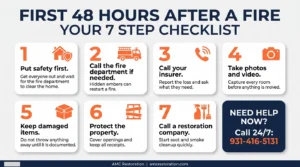
The first two days shape how smoothly everything else goes. Take these steps in order.
- Put safety first. Get everyone out. Do not re-enter until the fire department says it is safe.
- Call the fire department if needed. Even if the fire seems out, hidden embers can restart it.
- Call your insurer. Report the loss and ask what they need from you.
- Take photos and video. Capture every room before anything is moved or cleaned.
- Do not throw away damaged items yet. Your insurer may want to see them or count them.
- Protect the property. Board up openings or cover the roof if needed, and keep receipts.
- Call a restoration company. Our 24/7 emergency restoration team can start protecting your home right away.
Time matters because soot and smoke residue keep working on surfaces after the fire is out. Acting early helps limit the damage.
How to Document Smoke Damage for Your Claim
Good records make your smoke damage claim easier to understand. Start documenting as soon as it is safe.
- Photos and video: Take wide shots of each room, then close-ups of damage. Narrate what you see in the video.
- Room by room inventory: List each damaged item, its age, and its approximate value.
- Receipts: Keep every receipt for hotels, meals, emergency repairs, and cleaning supplies.
- Notes: Write down who you spoke with at your insurance company and what they said.
- Dates: Record when the fire happened, when you reported it, and when work began.
How to File a Smoke Damage Claim, Step by Step
Your insurer will have its own process, but most claims follow a similar path.
- Make sure everyone is safe and the fire department has cleared the home.
- Review your policy to see your coverage, limits, and deductible.
- Contact your insurer or agent to report the loss and get a claim number.
- Document the damage with photos, video, and an inventory.
- Prevent further damage with reasonable steps like securing the property.
- Meet with the adjuster and show them the damage in each room.
- Keep records and follow up in writing, and ask questions if anything is unclear.
The Insurance Information Institute has general guidance on fire claims. The NAIC explains policy and claim basics.
Common Mistakes That Delay or Reduce Claims
- Waiting too long to report the loss
- Throwing away damaged items before they are documented
- Skipping photos or taking only a few
- Letting soot and odor sit without any protection or cleanup
- Making major permanent repairs before talking to your insurer
- Not keeping receipts for temporary housing and emergency costs
- Assuming the first offer is final without reading the details
Most of these are easy to avoid when you slow down and write things down.
When to Call a Professional Restoration Company
Call a professional when smoke has spread past one room, when odor lingers, or when soot is on many surfaces. Cleaning smoke damage without the right tools can push residue deeper into materials.
A restoration company helps with cleanup, mitigation, and documentation. We can remove soot, treat odor, protect your home from more damage, and record the work we do.
We are not an insurance adjuster, and we do not decide what your policy covers. Your insurer makes coverage decisions.
We serve homeowners across Middle Tennessee, including Columbia, Lewisburg, Mt Pleasant, Summertown, and Nolensville. Here are a few local pages:
- fire restoration in Spring Hill, TN
- fire restoration in Franklin, TN
- fire restoration in Brentwood, TN
Frequently Asked Questions
How long do I have to file a smoke damage claim?
The deadline depends on your policy. Many policies require prompt notice, so report the loss as soon as you can and check your policy for exact timing.
Does insurance cover smoke smell?
Often, yes, when the odor comes from a covered fire loss. Coverage depends on your policy wording, so ask your insurer how odor removal is treated.
Who pays for a hotel during fire restoration?
Your homeowners policy may cover additional living expenses if you cannot stay in your home. Limits and conditions apply, so keep your receipts and confirm with your insurer.
Will my rates go up after a claim?
It is possible, but it depends on your insurer and your situation. Ask your agent how a claim might affect your premium.
Can I clean smoke damage myself?
Light cleaning of non-porous items may be fine. Soot and odor in walls, HVAC systems, and insulation usually need professional equipment, and cleaning before documenting can hurt your claim.
Get Help With Your Smoke Damage Today
A smoke damage insurance claim is easier when you act quickly, keep good records, and have a team that knows what to look for. You do not have to sort it out alone.
Call AMC Restoration at 931-416-5131 any hour of the day or night. We are licensed, insured and IICRC certified, and ready to start protecting your home.
Get help now or see the areas we serve.