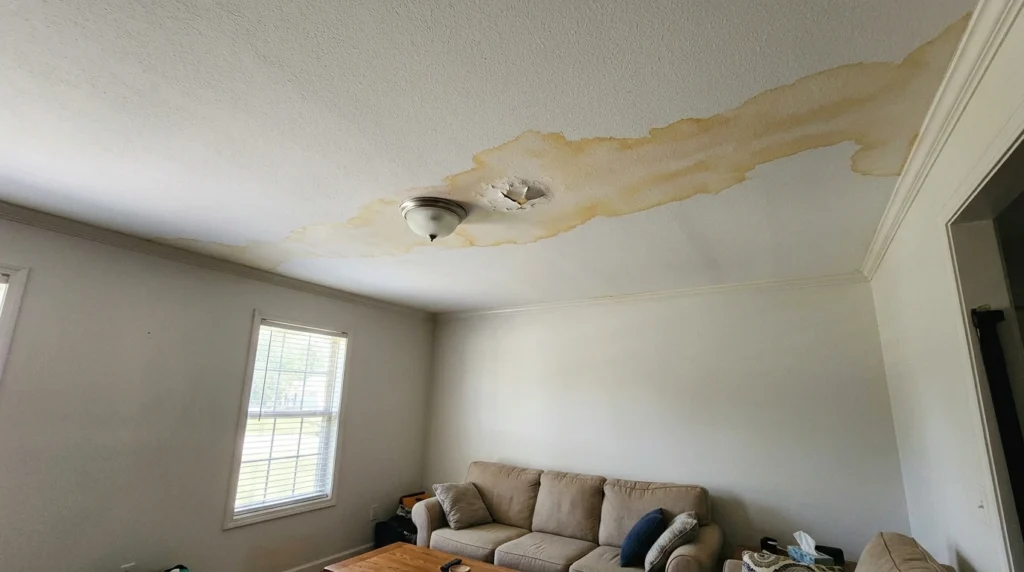
Water damage on ceiling surfaces can look alarming, even when the stain is only the size of a coin. A yellow or brown mark usually means moisture has been working its way through the drywall for a while, and it is worth finding the cause before it grows. If you are in Franklin or nearby, a local team that handles water damage repair in Franklin can help you understand what you are dealing with.
This guide covers the common causes, the warning signs, what to do right now and what to avoid. You will also learn when it makes sense to bring in a professional and what the repair process usually looks like.
Seeing a stain or a sag right now? Call 931-416-5131 and talk to our team about your ceiling.
What a Water Stain on Your Ceiling Really Means
A stain is the visible end of a longer story. Water travels along pipes, beams and insulation before it shows up overhead, so the actual leak may be several feet away from the spot you see. Drywall soaks up moisture like a sponge, which is why a stain often appears long after the water first got in.
Yellow or brown rings form as water dries and leaves minerals and dirt behind. A ring with several edges often means the area has gotten wet more than once.
Common Causes of Water Damage on Ceiling
Most ceiling leaks trace back to a handful of sources. Our page on water damage and leak restoration covers the wider picture, but these are the usual suspects in Middle Tennessee homes.
Roof leaks after fall rain and storms
October brings steady rain and plenty of leaves that clog gutters. Missing shingles, damaged flashing or backed up gutters can let water slip into the attic and soak the ceiling below. A new stain after a hard storm is a strong sign that the roof needs a look.
Plumbing leaks from an upstairs bathroom or kitchen
A leaking supply line, a worn tub seal or a loose drain can drip for weeks inside the floor above. These leaks are often slow, so the stain may show up in the room below long after the problem began.
HVAC condensation
Air conditioners and furnaces with a cooling coil produce condensation, which drains through a small line. When that line clogs or a drain pan overflows, water can spread into the ceiling. This is common when the unit sits in the attic.
Attic moisture
Poor ventilation and warm air leaking into a cold attic can cause condensation under the roof. That moisture can drip onto insulation and work its way down without any obvious leak.
Appliance leaks
Washing machines, dishwashers and water heaters on an upper floor can fail and send water straight down. A cracked hose or a failing tank is often the cause.
Reading the Stain: Warning Signs to Watch For
The ceiling usually gives you hints before things get worse. Watch for these signs:
- Yellow or brown rings, often with darker edges
- Bubbling or peeling paint
- Sagging or soft spots in the drywall
- A musty smell that does not go away
- A stain that keeps growing or comes back after drying
If you notice several of these at once, our guide on signs you need a water damage pro explains why surface fixes rarely solve the problem. Moisture that stays in place can also lead to mold, and the EPA’s guide to mold and moisture explains why drying quickly matters.
Safety First: What to Do Right Away
A wet ceiling can be heavy and can sit close to electrical wiring. Take these steps in order:
- Stay out from under any sagging or bulging area, and keep children and pets away.
- Do not touch or turn on a light fixture or ceiling fan near the wet spot.
- If it is safe to reach your electrical panel, turn off the breaker for that area.
- Call an electrician if water is near wiring or fixtures.
- Move furniture and belongings out of the way and cover what you cannot move.
- Place a bucket under any drip.
- Take clear photos and short videos of the damage before anything changes.
For more on water and electrical hazards, see ESFI guidance on water and electricity safety.

What Not to Do
Do not just paint over the stain. Paint hides the mark but leaves the moisture behind, and the stain usually returns. Do not ignore a sagging spot either, because it means the drywall is holding extra water.
Avoid poking or cutting into a bulging ceiling yourself. Trapped water can come down all at once, and you may be standing right under it. Leave that step to a professional.
When to Call a Pro for Water Damage on Ceiling
Call a professional when the stain keeps growing, the ceiling sags, the area smells musty or you cannot find the source. If you are searching for water damage repair near me, look for a licensed team that dries the structure and does not just treat the surface. Our 24/7 emergency water restoration crew can help when time matters.
If the area stays damp for more than a day or two, mold can start to grow, and the repair gets bigger. Call 931-416-5131 and ask for a free estimate.
Licensed (82787), insured and IICRC certified. Serving Franklin, Brentwood, Spring Hill, Columbia and nearby Middle Tennessee communities.
Ceiling Water Damage Repair Near Me: What to Expect
If you are looking for ceiling water damage repair near me, here is what a professional visit usually involves.
The team starts with an inspection and uses moisture meters to see how far the water has spread. Next comes finding the source, because water damage on ceiling surfaces will return if the leak is not fixed. A plumber or roofer may be needed for that step, and it should happen first.
Then the drying begins. Structural drying and mitigation uses air movers and dehumidifiers to pull moisture out of the framing and insulation. Wet drywall and insulation that cannot be saved are removed, and the area is repaired and repainted. This is where ceiling and drywall reconstruction brings the room back to normal.
Not sure what you are dealing with? Call us for a damage assessment and we will point you in the right direction.
Insurance and Documentation
Good records make any claim easier to explain. Take photos and video of the stain and the surrounding area, write down when you first noticed it and keep receipts for emergency steps. Then call your insurer to report the damage and ask what they need from you.
Coverage often depends on the cause of the leak, so see our article on does homeowners insurance cover water damage. For general safety and cleanup guidance after water events, Ready.gov’s flood guidance is a helpful reference.
This article is general information and not insurance or legal advice. Read your own policy and speak with your insurer or agent.
Ceiling Water Damage Repair in Franklin, Brentwood, Spring Hill and Columbia
We serve homeowners across Williamson and Maury counties and nearby areas. Whether you need water damage repair in Spring Hill, ceiling water damage repair in Brentwood or water damage help in Columbia, TN, our crews know the local homes and weather.
Frequently Asked Questions
I found a brown ring on my ceiling but it is not dripping. Is it still an active leak?
Possibly, or it was recently. A brown ring means water soaked through and dried at the edges, and rings often grow each time the area gets wet again. Check the stain after the next rain or after someone uses the upstairs shower. If the ring grows or the spot feels damp, treat it as an active leak.
My ceiling is sagging and bubbling after heavy rain. Is it going to fall?
A sagging ceiling can be unsafe, so take it seriously. Water adds a lot of weight to drywall, and wet drywall can loosen from the framing. Stay out from under the spot, keep people and pets away and have it checked as soon as you can. Nobody can say for sure from a description, which is why a quick inspection matters.
Can I just paint over a water stain on the ceiling?
It is tempting, but paint only hides the stain. If moisture is still there, the stain will usually bleed through and the paint can peel again. Find and fix the source first, let the area dry fully, then repair it and use a stain blocking primer before painting.
How do I tell if the leak is coming from the roof or a pipe?
Timing is a good clue. Stains that grow after rain point to the roof, while stains under a bathroom or kitchen, or ones that change when water is used, point to plumbing. If you cannot tell, a restoration team like AMC Restoration can use moisture meters to trace where the water is spreading, and a roofer or plumber can then fix the source.
Will homeowners insurance cover water damage on my ceiling?
It often can when the damage comes from a sudden and accidental event like a burst pipe, but it depends on your policy. Slow leaks, poor maintenance and flooding are often treated differently. Take photos, report the damage promptly and ask your insurer what applies to you.
How much does ceiling water damage repair usually cost in Franklin?
The price depends on the size of the damaged area, the source of the leak, how long it has been wet, how much insulation and drywall is involved, the drying time and the repair and paint needed. Prices vary across Franklin and nearby Middle Tennessee, so any number you see online is only a rough guide. AMC Restoration offers a free estimate after looking at the damage.
Take the Next Step
Water damage on ceiling surfaces rarely fixes itself, and acting early usually keeps the repair smaller. A quick call can tell you whether you are looking at a simple fix or a drying job that needs professional equipment.
AMC Restoration is available 24/7 and serves Franklin, Brentwood, Spring Hill and Columbia. Call 931-416-5131 or request a free estimate for ceiling repair.