A burst pipe at 2 a.m., a water heater that gives out, a storm that pushes water through the roof. However it happens, the first day decides how much of your home you save. Water spreads into walls, floors and insulation quickly, and mold can start growing within 24 to 48 hours.
This guide walks you through what to do, in order, plus what to avoid and when it’s time to call a professional.
First, Make the Area Safe
Before you touch anything, check for hazards.
- Electricity and water do not mix. If water is near outlets, appliances or your breaker panel, do not walk through standing water to reach it. If you can reach the panel while staying dry, switch off the power to the affected area. If you can’t, call an electrician or your utility company.
- Stay out of a sagging ceiling. A ceiling that bulges or drips heavily may be holding a lot of water and can collapse. Keep people and pets out of that room.
- Treat some water as contaminated. Water from a sewage backup, a toilet overflow with waste, or flooding from outside can carry bacteria. Avoid touching it, and keep children and pets away.
- Wear boots and gloves if you have to enter the area.
Stop the Water at the Source
No cleanup works while water is still coming in.
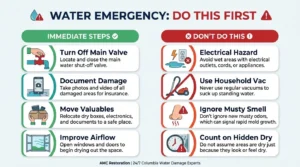
- Shut off the main water valve if a supply line has burst.
- For a washing machine, dishwasher, toilet or water heater, close the shutoff valve on that fixture.
- If water is coming through the roof, put a bucket under the leak and move belongings away. Emergency tarping is a job for a crew, not a ladder on a wet roof.
If you can’t find or reach the source, that’s a good reason to call for help right away.
Document Everything for Your Insurance
Do this before you move or throw away anything.
- Take photos and video of the water, the damaged walls, floors and ceilings, and your belongings.
- Write a list of damaged items, with approximate age and value.
- Call your insurance company to report the loss and ask what your policy requires.
- Keep your receipts for emergency repairs, hotel stays and supplies.
- Don’t discard damaged items until your adjuster has seen them or approved it.
Most policies cover sudden and accidental water damage, such as a burst pipe or an appliance failure, and many expect you to take reasonable steps to prevent further damage. Coverage differs between policies, so check yours or ask your agent. A restoration company that works with insurers can also provide moisture readings and written documentation to support your claim.
What You Can Safely Do Yourself
While you wait for help, these steps are low risk and help limit the damage:
- Move furniture, electronics and valuables to a dry room.
- Pick up rugs and loose items, and prop wet cushions up to air.
- Remove books, papers and photos from wet areas.
- Soak up small amounts of clean water with towels or a mop.
- Open windows if the weather is dry, to improve airflow.
- Put aluminum foil or plastic under furniture legs on wet carpet to protect the furniture.
What Not to Do
A few well-meant moves can make things worse or cause injury.
- Don’t use a regular household vacuum on wet floors or carpet. It’s an electrical shock risk.
- Don’t turn on ceiling lights or fans if the ceiling is wet or sagging.
- Don’t count on household fans to dry the house. They move air across the surface, but moisture stays inside walls, baseboards and framing.
- Don’t paint or cover wet walls. Sealing moisture in leads to peeling, odors and mold.
- Don’t ignore a musty smell. It usually means moisture is still hiding somewhere.
- Don’t wait to see if it dries on its own. Hidden moisture rarely does.
When to Call a Professional
Some water damage is a mop-and-towels job. Many cases aren’t. Call a restoration company right away if:
- The water came from a sewage backup or outside flooding.
- Water has been sitting for more than 24 to 48 hours.
- It has soaked into walls, insulation, subfloors or ceilings.
- Your hardwood floors are cupping or lifting.
- A ceiling is sagging or the damage covers more than one room.
- You can see or smell mold.
- You can’t find the source of the leak.
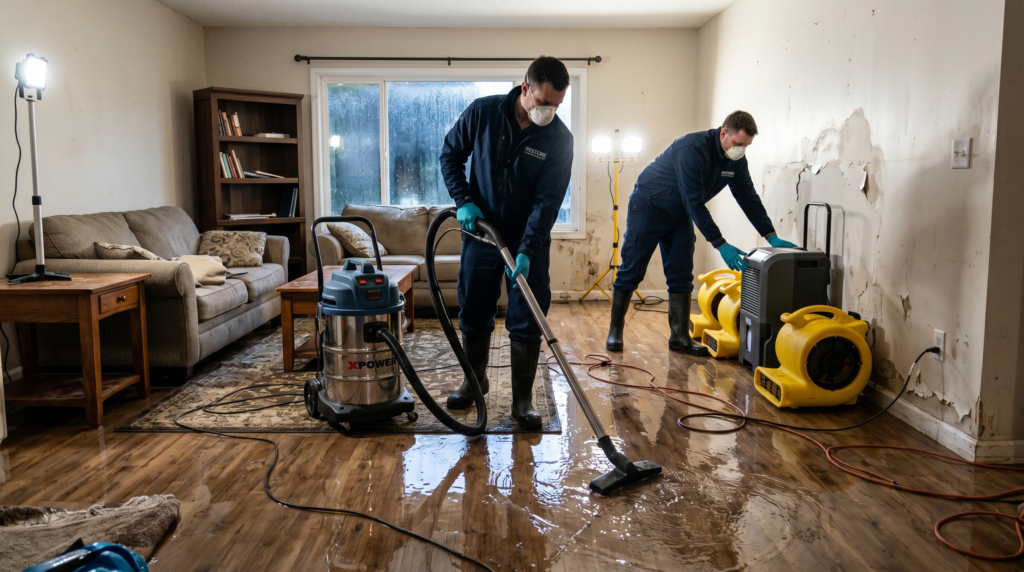
A professional crew uses moisture meters and thermal imaging to find water you can’t see, extracts the standing water, and dries the structure with industrial air movers and dehumidifiers while checking moisture levels each day. If you’re in Columbia or nearby Middle Tennessee, our team provides water damage restoration in Columbia, TN around the clock.
When you compare companies, confirm they are licensed and insured, ask for a written estimate, and ask whether they will help with your insurance paperwork. You can check contractor licensing through the Tennessee Department of Commerce and Insurance. For guidance on flood events and disaster assistance, the Tennessee Emergency Management Agency is a useful resource.
How Fast Does Mold Start?
Mold needs moisture, a food source and some warmth, and a wet home has all three. Spores are already in the air, so once materials stay damp, growth can begin within 24 to 48 hours. Drywall, insulation, carpet padding and wood are common places for it to take hold.
The best prevention is speed: stop the source, remove the standing water, and dry the structure completely. If drying is delayed or incomplete, mold can spread inside walls long before you see it.
Frequently Asked Questions
How long does it take to dry a home after water damage?
It depends on how much water there was, what it soaked into, and the weather. Professional drying of a structure commonly takes several days, and a technician should check moisture levels daily until the materials reach a dry standard. Surfaces that feel dry can still hold moisture inside.
Can I dry water damage with household fans and a dehumidifier?
For a small, clean spill on a hard surface, maybe. For water that reached walls, flooring layers or insulation, household equipment usually isn’t enough. Industrial air movers and low-grain refrigerant dehumidifiers pull moisture out of building materials, and moisture meters confirm the job is done.
Will my insurance cover water damage?
Most homeowner policies cover sudden, accidental water damage such as burst pipes and appliance failures. Gradual leaks, flood water and sewer backup are often treated differently and may need separate coverage. Call your insurer early, document everything, and ask your agent what your policy includes.
Who do I call for water damage in Columbia, TN?
Call a local, licensed and insured restoration company that answers 24/7 and can work with your insurance company. AMC Restoration serves Columbia and the surrounding Middle Tennessee area.
Need Help Right Now?
If water is still spreading, don’t wait. Call AMC Restoration at (931) 416-5131, any time of day, for a free inspection.