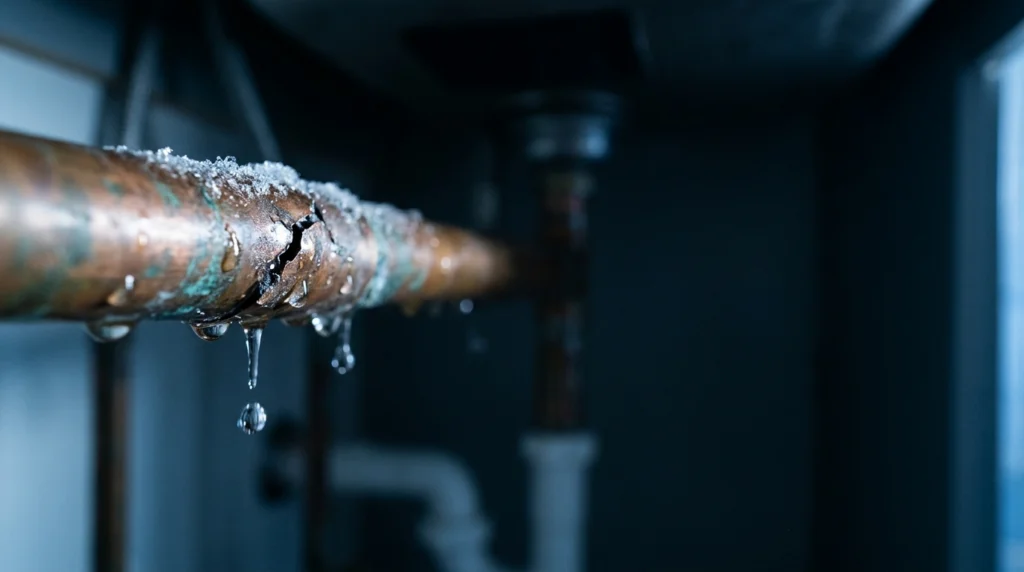
A hard freeze doesn’t have to last long to crack a pipe. Water expands as it freezes, and the pressure can split a pipe in a wall, a crawl space or an unheated garage. Often you don’t notice until the ice thaws and water starts pouring out.
If a pipe has burst or you think one has, here’s what to do, in order.
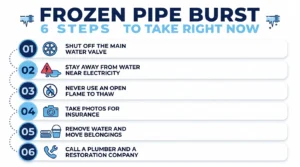
Step 1: Shut Off the Main Water Valve
This is the most important step. Every minute the water runs, more of your home gets soaked.
- Find your main shutoff valve. It’s usually where the water line enters the house, in a basement, crawl space, utility room or garage, or near the water meter.
- Turn it fully off.
- After the main is closed, open a faucet or two on the lowest floor to drain the remaining water from the pipes.
If you don’t know where the valve is, find it now, before the next freeze, and make sure everyone in the house knows where it is.
Step 2: Keep Everyone Safe
- Stay away from water near electricity. If water is near outlets, appliances or your breaker panel, don’t walk through it. If you can reach the panel while staying dry, switch off power to the affected area. If you can’t, call an electrician or your utility company.
- Avoid a bulging or dripping ceiling. It may be holding a lot of water and can collapse. Keep people and pets out of that room, and don’t use ceiling lights or fans there.
- Turn off your water heater if the burst is near it or the system has been drained. For an electric heater, switch off the breaker. For a gas heater, set the control to the “off” or “pilot” setting.
Step 3: Do Not Use a Torch or Open Flame
If you find a frozen pipe that hasn’t burst yet, or you’re thawing the area after a burst, never use a blowtorch, propane heater or any open flame. It’s a fire risk, and it can damage the pipe and the wood around it.
Safer ways to warm a frozen pipe:
- Open the nearest faucet so water can flow as the ice melts.
- Warm the pipe with a hair dryer, a heating pad or warm towels. Start near the faucet and work back toward the frozen section.
- Never leave a heating device unattended, and keep it away from standing water.
If the pipe is visibly cracked, split or leaking, don’t thaw it. Leave the water off and call a plumber.
Step 4: Document the Damage for Your Insurance
Before you clean up, record what happened.
- Take photos and video of the burst pipe, the wet areas and damaged belongings.
- Call your insurance company to report the loss and ask what your policy requires.
- Write a list of damaged items with approximate age and value.
- Keep receipts for emergency repairs, supplies and any hotel stays.
Most policies cover a sudden burst pipe, but coverage can be limited in some situations, for example if the home was left unheated. Check your policy, and read our guide on whether homeowners insurance covers water damage in Tennessee.
Step 5: Remove the Water and Protect Your Belongings
While you wait for help, you can safely:
- Mop and towel up small amounts of clean water.
- Move furniture, electronics, rugs and valuables to a dry room.
- Take photos off the walls and pick up loose items from the floor.
- Put foil or plastic under furniture legs on wet carpet.
Don’t use a regular household vacuum on wet floors, and don’t try to dry out soaked walls with a few fans. Moisture hides inside walls and floors long after the surface looks dry. For the full first-24-hours checklist, see what to do after water damage.
Step 6: Call a Plumber and a Restoration Company
You usually need both, and they do different jobs.
- A plumber repairs the broken pipe and restores your water.
- A restoration company removes the water, dries the structure with industrial equipment, and handles repairs afterward.
Call the restoration company right away, even before the plumber arrives. Drying needs to start fast, because mold can begin to grow within 24 to 48 hours in damp materials. Our water damage restoration in Columbia, TN team answers 24/7. To understand what comes next, read how long it takes to dry a house after water damage.
Signs a Pipe May Have Frozen or Burst
Catch problems early with these warning signs during a cold snap:
- No water, or only a trickle, from a faucet.
- Frost on exposed pipes.
- A bulging or cracked pipe.
- Strange sounds, such as banging or gurgling, when you turn on water.
- Wet spots, stains or bubbling paint on a wall or ceiling.
- A musty smell in a room near the plumbing.
If you spot any of these, shut off the main valve and check the area before the pipe thaws.
Where Pipes Freeze Most in Tennessee Homes
Middle Tennessee doesn’t get brutal winters every year, which is exactly why many homes aren’t prepared when a hard freeze arrives. The usual trouble spots are:
- Pipes in exterior walls, especially on the north side.
- Crawl spaces and unheated basements.
- Attics and unheated garages.
- Pipes under kitchen and bathroom sinks on outside walls.
- Outdoor hose bibs and sprinkler lines.
Quick Ways to Lower the Risk Before the Next Freeze
- Let faucets drip slightly during a hard freeze, especially on outside walls.
- Open cabinet doors under sinks so warm air reaches the pipes.
- Disconnect garden hoses and cover outdoor spigots.
- Insulate exposed pipes in crawl spaces and garages.
- Keep your home heated, even if you’re away.
- Know where your main shutoff valve is.
Frequently Asked Questions
How long does it take for a pipe to freeze and burst?
It depends on the temperature, the wind and how well the pipe is insulated. Pipes in exposed areas can freeze after several hours of temperatures at or below freezing. A pipe often bursts when ice blocks the flow and pressure builds up, and you may not see the leak until it thaws.
Does homeowners insurance cover a burst frozen pipe?
Often yes, because a burst pipe is usually sudden and accidental. Your insurer may limit coverage in certain situations, such as an unheated home or a slow leak. Check your policy’s exclusions and ask your agent.
Should I call a plumber or a restoration company first?
Call both. A plumber fixes the pipe, and a restoration company dries the structure and prevents mold. Don’t wait for repairs to finish before starting drying.
Can I use a heater or hair dryer to thaw frozen pipes?
A hair dryer or heating pad is safer. Never use an open flame, and don’t leave any heat source unattended. If the pipe is cracked, don’t thaw it. Shut off the water and call a plumber.
What if I find the burst after the pipe thaws?
Turn off the main valve, follow the safety steps above and call for help. Water that has been leaking inside walls or under floors is exactly the kind of hidden damage a moisture meter and thermal camera can locate.
Burst Pipe? Don’t Wait.
If water is spreading through your home, call AMC Restoration at (931) 416-5131, Monday through Saturday, any time, for a free inspection.