The water is gone, the floor looks dry, and you’re wondering when life can go back to normal. Here’s the part most people don’t expect: the surface drying out is only the start. Moisture hides inside walls, subfloors and framing, and it has to be removed completely before repairs begin.
This guide explains how long drying usually takes, what changes the timeline, and how to tell when your house is truly dry.
The Short Answer
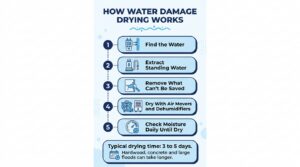
Most homes need about 3 to 5 days of professional drying after the standing water is removed. Larger losses, hardwood floors, plaster, wet insulation or water that sat for a long time can stretch that to a week or two. These are typical ranges, not promises. Every job is different, and a technician should give you an estimate after inspecting the damage with moisture meters.
What Affects Drying Time
Several factors decide whether your house dries in a few days or a couple of weeks:
- How much water, and how long it sat. A small leak caught in an hour dries far faster than a flood that soaked the house overnight.
- What the water soaked into. Carpet dries quickly. Hardwood, plaster and concrete hold moisture much longer.
- The type of water. Clean water from a supply line is the easiest to deal with. Sewage or flood water is contaminated, and soaked porous materials usually have to be removed rather than dried.
- Humidity and temperature. Warm, dry air dries a house faster. Humid weather, common in Middle Tennessee summers, slows it down.
- Size and layout of the affected area. More rooms, more floors and closed-off spaces need more equipment and more time.
- How fast drying starts. Every hour of delay lets water travel deeper into walls and floors.
Typical Drying Times by Material
These are rough ranges to help you plan. Your own timeline depends on the factors above.
- Carpet: The carpet itself can often be dried in a few days after extraction. The pad underneath is usually removed and replaced.
- Drywall: It can dry in several days if it’s treated quickly and hasn’t been soaked through. Badly saturated drywall is often cheaper and safer to replace. Our guide on whether wet drywall can be saved explains how to tell.
- Insulation: Wet insulation holds water and is usually removed.
- Hardwood floors: Often a week or more, and boards may still cup or buckle, which can mean replacement.
- Subfloor and wood framing: Commonly several days to a week or longer, because moisture sits deep in the wood.
- Concrete slab: Can take weeks to release the moisture it absorbed.
How Professional Drying Works
Professional drying is a process, not just a set of fans.
- Find the water. Moisture meters and thermal imaging map where water has spread, including behind walls and under floors.
- Extract standing water. Pumps and extractors remove as much bulk water as possible first.
- Remove what can’t be saved. Soaked padding, wet insulation and badly damaged drywall come out so the rest of the structure can dry.
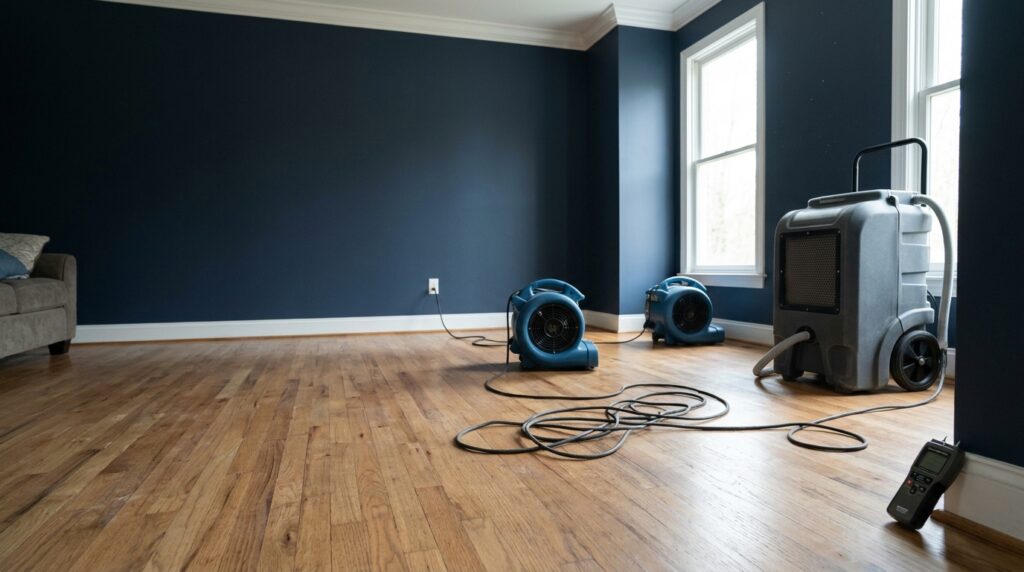
- Set up drying equipment. High-velocity air movers push air across wet surfaces while low-grain refrigerant (LGR) dehumidifiers pull moisture out of the air. Sometimes small openings are made in walls or baseboards so dry air can reach the cavity.
- Monitor every day. A technician takes moisture readings, adjusts the equipment and records the progress.
- Confirm it’s dry, then remove the equipment.
This is the work behind our structural drying and mitigation service.
How Do You Know the House Is Actually Dry?
Touching a wall isn’t a test. A reliable job is confirmed with numbers:
- Daily moisture readings on walls, floors and framing.
- A comparison to a dry reference. Technicians measure similar unaffected materials in the same home and aim for the affected materials to reach that dry standard.
- Indoor humidity back in a healthy range. The EPA suggests keeping indoor humidity between 30 and 50 percent, and no higher than 60 percent, to help prevent mold. Read more in the EPA’s guide to mold and moisture.
- Written records. Keep the readings and photos. They also support your insurance claim. See our guide on whether homeowners insurance covers water damage in Tennessee.
Why Fans and Open Windows Aren’t Enough
Household fans move air across the surface, but the water that causes the most trouble is inside walls, baseboards and framing. A regular dehumidifier is small and can’t keep up with a large wet area. Without measuring, you can’t tell whether the structure is dry or only looks dry, and mold can start growing in as little as 24 to 48 hours in damp materials.
Signs Your House Isn’t Fully Dry
If you dried the area yourself, or a company left early, watch for:
- A musty smell, especially in a closed room. Our article on musty smell in the house after rain covers why it matters.
- Cupping or buckling in wood floors.
- Paint bubbling or peeling, or wallpaper lifting.
- Stains that keep coming back or spreading on a wall or ceiling.
- Walls or floors that feel cool or damp compared to the rest of the room.
- Visible mold or a rise in allergy symptoms at home.
If you notice any of these, get the area checked with a moisture meter.
Can You Speed Up the Drying?
You can’t rush physics, but you can avoid slowing it down:
- Stop the source first. Drying can’t start while water is still coming in.
- Start right away. The first hours matter most. Our guide on what to do after water damage covers the first 24 hours.
- Remove soaked items like rugs, cushions and stored boxes from the wet area.
- Keep the drying zone closed if a crew is working, so the equipment can control the air.
- Follow your technician’s advice about heating, cooling and doors. It depends on the setup.
- Don’t cover wet surfaces with paint, flooring or furniture before they’re confirmed dry.
What Happens After the House Is Dry?
Once readings are in the dry range, the repair phase begins: replacing drywall, insulation and flooring, then painting and finishing. With a company that handles both drying and rebuilding, that transition is smoother. If you’re dealing with an active loss right now, see our water damage restoration in Columbia, TN service.
Frequently Asked Questions
Is it normal for drying equipment to run for several days?
Yes. Air movers and dehumidifiers typically run around the clock for a few days. That steady airflow and dehumidification is what pulls moisture out of the structure.
Can I stay in my house during drying?
Often yes, if the water was clean and the area is safe. The equipment is loud and warm, though. If the water was contaminated, such as sewage or flood water, ask your restoration team whether it’s safe to stay.
Will drying equipment raise my electric bill?
It can, because the equipment runs continuously. Ask your insurance company whether the added electricity cost is covered, and keep your bills.
How soon can mold grow after water damage?
Mold can begin growing within 24 to 48 hours in damp materials. That’s why fast extraction and complete drying matter.
How long does it take to dry a basement after flooding?
Often longer than a room above ground, because concrete and surrounding soil hold moisture. Expect anywhere from several days to a couple of weeks, depending on the amount of water and the conditions.
Need Your Home Dried Out Fast?
If water has soaked your home, the sooner drying starts, the less you’ll have to replace. Call AMC Restoration at (931) 416-5131, any time of day, for a free inspection.