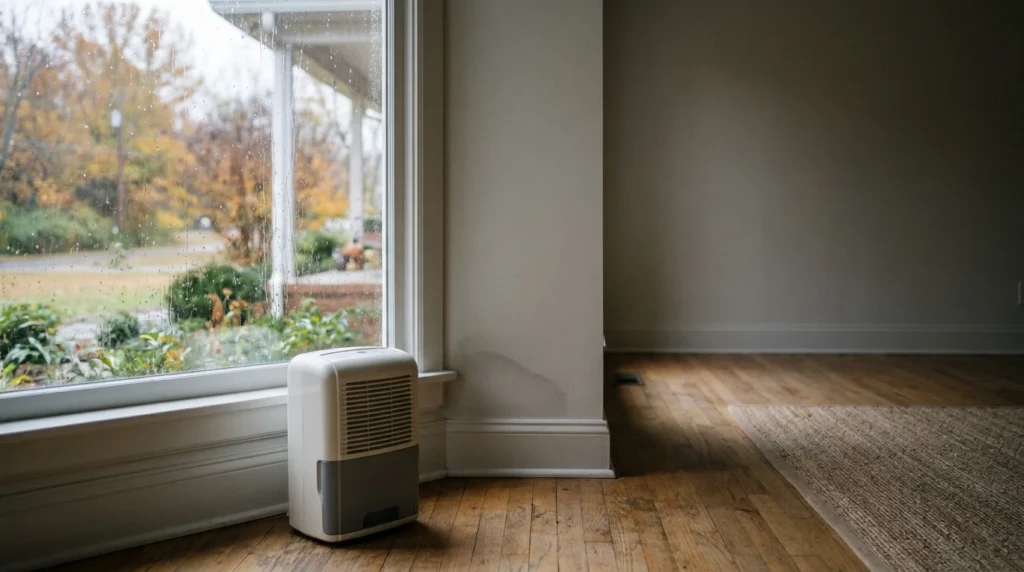
A musty smell in house after rain is a common worry, and it can make you wonder if mold is growing out of sight. The good news is that the smell often has a simple cause, and you can start checking for it today.
Fall in Middle Tennessee often brings heavy rain on top of lingering humidity, so damp materials have little time to dry. This guide gives a quick answer, shows where moisture hides, and explains what to do next.
Quick Answer: Rain raises humidity and pushes moisture through small gaps, so damp materials release a musty odor. It does not always mean mold, but a smell that keeps returning often points to hidden moisture. Check the crawl space or basement, windows, roof, gutters and the HVAC drain pan first.
Why Does a House Smell Musty After Rain?
Rain adds moisture to your home and the soil around it, and that moisture is what you smell.
During high humidity, water vapor and rain can slip in through small gaps, cracks and porous materials like wood, drywall and insulation. Damp materials give off a damp smell. Mold and mildew need moisture to grow, which is why controlling moisture is the best defense.
That is why a musty smell in house after rain often shows up in closets, lower levels and rooms with older windows.
Is a Musty Smell Always Mold?
No. Several everyday things can cause a musty odor without any mold in the walls.
- Damp soil and humid outdoor air carried inside
- Wet carpet, rugs, towels or pet bedding that never fully dried
- A dirty HVAC drain pan that holds stagnant water
Still, a smell that keeps coming back usually points to hidden moisture. Treat it as a moisture problem first, because finding the water is more useful than guessing about the mold.
Where Hidden Mold Usually Starts After Heavy Rain
Restoration crews commonly find moisture in the same few places after heavy fall rain. Check these spots first.
- Crawl space: This shallow area under the floor stays damp when soil absorbs rain or vents let in humid air.
- Basement walls and floor: Foundation seepage can wick through concrete and leave walls damp.
- Attic and roof leaks: A small roof leak can soak insulation long before a stain appears.
- Behind drywall near windows and doors: Water can run down frames and settle inside the wall.
- Around clogged gutters and downspouts: Overflow pours water against the foundation.
- HVAC system and ducts: A blocked drain or damp duct can spread a damp smell through the house.
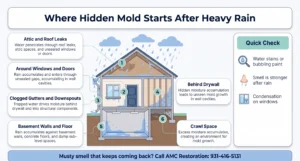
Signs of Hidden Mold to Check Now
These signs do not prove mold, but they do point to moisture worth checking.
| What You Notice | What It May Mean | What to Do |
| Musty smell only when it rains | Water entering through the roof, foundation or a gap that stays dry in good weather | Inspect the roof line, foundation and window and door seals right after the next rain. |
| Water stains or bubbling paint | A leak or moisture moving through a wall or ceiling | Find the source and ask a professional to check if the area stays damp. |
| Peeling wallpaper or warped baseboards | Moisture behind the surface for a long time | Check nearby walls and floors for dampness and fix the source. |
| Visible fuzzy or dark spots | Visible mold on a surface | Clean a small patch carefully (see the safety note below). Call a professional for large areas. |
| Condensation on windows | Too much humidity inside the home | Run exhaust fans and watch your humidity level. |
| Allergy-like symptoms indoors | Possible mold or damp air, though many things cause symptoms | Talk to a doctor and look for moisture sources. |
What to Do Right Now
Start by finding and stopping the water, then dry everything out.
- Find and stop the water source if you can, such as a dripping pipe or an overflowing gutter.
- Run a dehumidifier and keep indoor humidity roughly 30 to 50 percent. The EPA guide to mold and moisture advises staying below 60 percent, ideally between 30 and 50 percent.
- Dry any wet items within 24 to 48 hours. That is the window EPA gives for preventing mold growth.
- Clean gutters and make sure downspouts carry water away from the house.
- Check under sinks and around windows for drips, soft spots and damp caulk.
- Do not seal or paint over damp areas. It traps moisture and hides the problem.
Safety note: Never mix cleaning chemicals. Bleach and ammonia together can make toxic fumes. Wear gloves and an N-95 mask when cleaning a small area, and do not disturb a large moldy area.
When to Call a Professional
Call a professional when the problem is large, keeps returning or involves contaminated water. These are the main signs:
- Mold covering more than about 10 square feet, which is the rough line in EPA guidance on mold cleanup in your home
- Mold after sewage or flood water, which EPA says calls for someone experienced with contaminated water
- An odor that returns after everything has dried
- Anyone in the home with asthma, allergies or a weak immune system. The CDC mold page says mold can cause severe reactions in people with asthma or mold allergies. Speak to a doctor about any symptoms.
AMC Restoration is a property damage restoration company. We help with water leak and damage restoration, so the moisture is fixed at the source. If mold is your main concern, we can point you toward a qualified mold professional.
Wet building materials must dry fully before a smell is truly gone. Professional structural drying removes moisture from walls, floors and framing with fans and dehumidifying equipment.
If water is still coming in, our 24/7 emergency response can help. We bring [X years serving Middle Tennessee] and [IICRC certification, if applicable] to every job.
How to Prevent a Musty Smell Next Rainy Season
Keeping water out and humidity down is the best prevention. Try these steps before the next heavy rain:
- Keep gutters clean and slope the soil so water drains away from the foundation.
- Seal gaps around windows and doors with fresh caulk or weatherstripping.
- Repair roof flashing, the metal strips that seal joints on the roof.
- Run exhaust fans in bathrooms and kitchens.
- Have the HVAC drain line serviced so it does not clog.
- Add a vapor barrier to the crawl space, which is a plastic sheet that blocks moisture from the ground.
- Monitor humidity with a hygrometer, a small gauge that shows moisture in the air.
Frequently Asked Questions
Why does my house only smell musty when it rains?
Rain raises humidity and can push water through small gaps in the roof, foundation or walls. Those damp spots dry out in good weather, so the odor fades. Look for leaks and gaps after the next storm. A smell that keeps returning usually means a hidden source.
Is a musty smell always mold, or can it be something else?
No, it is not always mold. Wet carpet, damp pet bedding, a dirty drain pan or humid air can all smell musty. Still, a lingering smell often means moisture is trapped somewhere. Dry what you can, then check the usual spots before assuming the worst.
Can I have mold in my house without seeing any?
Yes, mold can grow out of sight, such as inside walls, under flooring or in ductwork. A damp smell or warped trim can be a clue. Do not cut open walls yourself. If the signs add up, ask a qualified professional to find the moisture.
How do I get rid of the musty smell in my house after rain?
Remove the moisture first. Dry wet items, open windows when the air is dry, and use fans to move air. Clean small affected areas with detergent and water. If the smell returns, the source is still wet, so keep searching instead of covering it with sprays.
Is it safe to sleep in a house that smells musty?
It depends on the cause and on who lives there. Mold can bother people with allergies, asthma or weak immune systems, so they should be extra careful. If anyone has symptoms, talk to a doctor, and work on drying the source quickly.
Will a dehumidifier get rid of the musty smell?
It can help, but it only treats the air. Lowering humidity slows damp odors, yet it will not fix a leak or dry soaked drywall. Empty the tank often, keep doors closed in that room, and still look for the moisture source.
Do I need a mold test kit if I smell mold but can’t find it?
Usually no. A kit may detect spores, but it cannot show where moisture is coming from, and EPA does not recommend routine sampling. Put your effort into finding leaks and damp areas. If the smell persists, a qualified mold professional can inspect.
Final Thoughts
A musty smell in house after rain is a signal to look for moisture, not a reason to panic. Dry the area, fix the source and keep humidity in check. If the smell keeps returning, ask for help.
If you are dealing with water damage, reach out to our team or call 931-416-5131.
You can also see the areas we serve across Middle Tennessee.