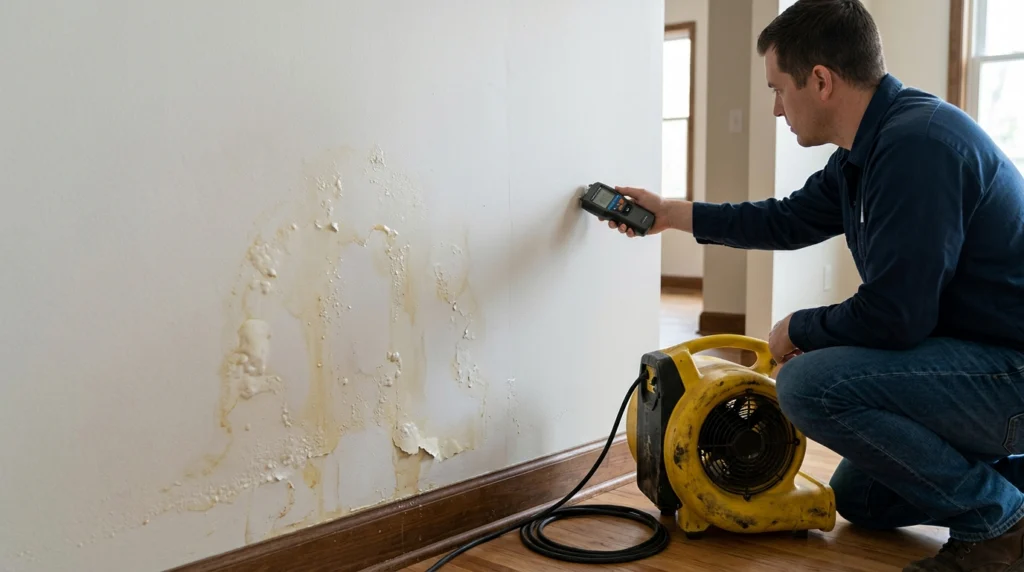
Can wet drywall be saved? Sometimes it can, and sometimes the wall has to come out. The answer depends on how long the drywall stayed wet, what kind of water soaked it, and how it looks and feels right now.
A leaking pipe, a roof drip after a heavy October rain, or a washing machine hose that let go can all leave a wall soaked. Drywall hides trouble well, because a wall that looks dry on the surface can still hold water inside. Knowing what to check can save you money and keep mold from moving in.
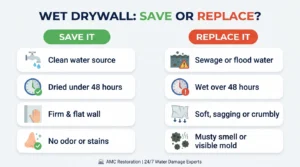
Quick answer: Wet drywall can often be saved if clean water soaked it, it was dried within 24 to 48 hours, and it still feels firm with no sagging, staining, or musty smell. Drywall that stayed wet longer, touched sewage or flood water, or shows mold growth usually needs to be replaced.
Can Wet Drywall Be Saved? Check These 3 Things First
Restoration pros run through the same short checklist on almost every job, and you can do the same.
- Time. The EPA advises drying water-damaged areas and items within 24 to 48 hours to prevent mold growth, and notes that in most cases mold will not grow if wet materials are dried within that window. Its guide to mold, moisture, and your home explains the reasoning. Past 48 hours, the odds shift toward replacement.
- Water source. Clean water from a supply line or an early roof leak is the best case. Water from a sewage backup, a flooded yard, or a dirty appliance drain carries bacteria, which changes everything. The EPA says damage from sewage or other contaminated water calls for a professional with experience in that kind of cleanup.
- Condition. Press the wall gently with your palm. A firm, flat surface is a good sign. Soft, crumbly, or bulging drywall means the gypsum core has absorbed too much water.
Signs Your Wet Drywall May Be Worth Saving
- The water was clean, and you caught the problem quickly.
- The surface feels firm and looks flat, with no bulges or sag.
- There are no brown stains, bubbling paint, or peeling tape at the seams.
- You do not smell anything musty near the wall.
- The insulation behind the board is not soaked, or it can be reached and dried.
Signs It Needs to Be Replaced
| What You See | What It Usually Means | Next Step |
|---|---|---|
| Sagging or bulging board | The drywall has absorbed too much water and lost strength | Plan to remove it |
| Soft, crumbly, or powdery surface | The gypsum core is breaking down | Replace it |
| Brown rings or spreading stains | Repeated or long-term moisture | Find the source, then replace |
| Bubbling or peeling paint | Moisture trapped behind the surface | Open the area and check behind it |
| Musty smell | Possible hidden mold | Get it inspected before sealing or painting |
| Visible mold | Mold feeds on the paper face of the board | Call a pro for anything larger than a small patch |
| Wet for more than 48 hours | High risk of mold growth inside the wall | Have it assessed with a moisture meter |
| Sewage or flood water | Contaminated material | Professional removal |
What to Do in the First 24 Hours
- Stop the water at the source. Shut off the supply, fix the leak, or cover the roof opening.
- Check electrical safety. If the wet drywall is near outlets, switches, or a light fixture, turn off power to that area at the breaker before you touch anything.
- Take photos and videos for your insurance claim before you move or remove anything.
- Soak up standing water, and move furniture away from the wall.
- Get air moving with fans and a dehumidifier. The EPA suggests keeping indoor humidity below 60 percent, and ideally between 30 and 50 percent.
- Remove the baseboards if you can, so air can reach the space behind the board.
- Hold off on painting, caulking, or covering the wall. The EPA’s mold cleanup guidance warns against painting or caulking over moldy surfaces, and sealing a damp wall only traps moisture.
Why the Wall Cavity Is the Hard Part
Surface dryness is not the finish line. Moisture settles into the wall cavity, the hidden space between the drywall and the framing, where insulation and wood can stay damp long after the paint feels dry. The EPA points out that hidden mold can grow on the back side of drywall, so a musty smell with no visible source is an important clue.
That is why professional drying involves more than a few box fans. Crews use moisture meters and thermal imaging to locate wet areas, then set up high-powered fans and dehumidifiers. When needed, they pull baseboards or open the bottom of the wall so air can move behind the board, and they check readings daily until materials return to normal. You can read more about the process on our structural drying and mitigation page.
When to Call a Professional
- The water came from a sewage backup or flood water.
- The wet area is larger than a few square feet, or a ceiling is sagging.
- Walls still feel damp after 48 hours of drying.
- You smell mustiness or see mold, especially if it covers more than about 10 square feet, the EPA’s cutoff for handling cleanup yourself.
- Your home is older, and you plan to cut or sand drywall or joint compound. Have it tested for asbestos first.
- You cannot tell whether the insulation behind the wall is wet.
If you are dealing with a recent leak, our team offers water leak and damage restoration, including drying, cleanup, and removal of wet materials. Need help in the middle of the night? Our 24/7 emergency response is available. When sections of wall have to come out, we can also repair and rebuild the wall afterward, so you are not left coordinating several contractors.
How to Keep Drywall Dry This Fall
- Clear leaves from gutters and downspouts so water drains away from the house.
- Check roof flashing and window seals before the next heavy rain.
- Fix slow drips under sinks and behind appliances right away.
- Run a dehumidifier in damp rooms, and use bathroom and kitchen fans.
- Look for new stains or bubbling paint after every big storm.
Frequently Asked Questions
Can I just let wet drywall dry on its own?
Sometimes, if the water was clean, the wall is firm, and you add fans and a dehumidifier within the first day or two. Even so, drywall left to dry in place can stay damp inside the wall. If you cannot confirm it is fully dry, ask a restoration pro to check it with a moisture meter.
How long does it take for wet drywall to dry?
It depends on how much water soaked in, the humidity, and the airflow. The surface may feel dry in a day or two, but the cavity behind it often takes longer. Start drying right away, and confirm the result with a moisture meter instead of relying on touch.
Will wet drywall always grow mold?
No. The EPA says mold usually will not grow if wet materials are dried within 24 to 48 hours. The risk climbs the longer drywall stays damp, especially if contaminated water soaked it or the insulation behind it stays wet.
How can I tell if drywall is wet inside the wall?
Look for stains, bubbling paint, a soft or cool spot, warped baseboards, or a musty smell. None of these is proof on its own. A moisture meter or thermal camera gives the most reliable answer without cutting into the wall.
Can I paint over a water stain on drywall?
Not until the wall is completely dry and the leak is fixed. Painting over damp drywall traps moisture and can hide mold. The EPA advises against painting or caulking moldy surfaces. Find the source, dry the wall, and use a stain-blocking primer before repainting.
Will insurance pay to replace wet drywall?
It depends on the cause. Policies usually respond to sudden events like a burst pipe more readily than to slow leaks, and flood damage is often excluded without separate coverage. Document everything, and read our guide to water damage insurance coverage in Tennessee.
Is it safe to stay in a room with wet drywall?
For a small area with clean water, usually yes, as long as the power is safe and you are drying it quickly. Avoid the room if you see sagging drywall, visible mold, or sewage, or if anyone has asthma, allergies, or a weak immune system. When unsure, have it checked.
Final Thoughts
So, can wet drywall be saved? Often yes, if you act within a day or two, the water was clean, and the wall is still firm. When you are unsure, choose the safe route, because hidden moisture is how small leaks turn into mold and bigger repairs. Call AMC Restoration at 931-416-5131 or reach out to our team for help assessing the damage. You can also see the areas we serve across Middle Tennessee to confirm we cover your neighborhood.