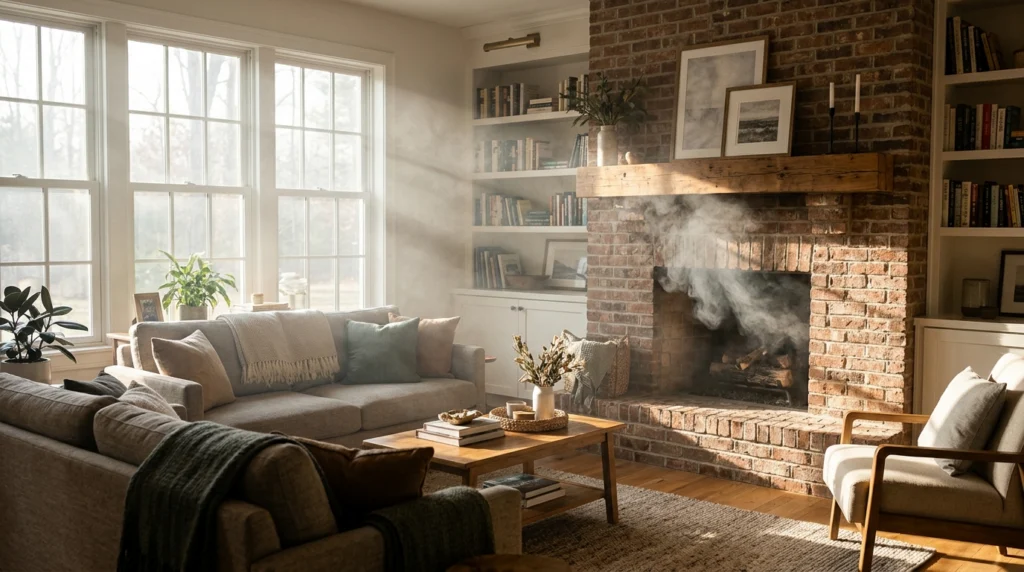
Fireplace smoke coming into the house can turn a cozy first fire of the season into a frantic dash for open windows. One minute you are settling in with a blanket. The next, a gray haze is drifting across the living room and your eyes are stinging.
The good news is that most smoke problems have a simple cause, and many take only a minute to fix. A few causes are serious, though, including blocked flues and carbon monoxide. This guide helps you tell the difference fast, so you know what to do right now and what to do before your next fire.
Quick answer: Smoke usually backs into a room because the damper is closed, the flue is cold or blocked, the wood is damp, or the house is pulling air down the chimney. Open the damper, ventilate the room, and stop adding wood. If smoke keeps returning, or anyone feels dizzy or sick, get everyone outside and have the chimney inspected before the next fire.
Why Does Smoke Back Up Into the Room?
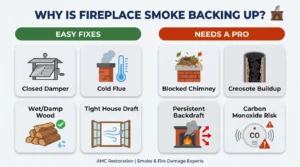
A fireplace works only when hot gases rise up the flue and carry the smoke with them. Anything that weakens that upward pull sends smoke the easy way, straight into your living space. These are the usual suspects.
| Cause | What You Notice | Quick Fix |
|---|---|---|
| Closed or partly closed damper | Smoke the moment you light the fire | Open it fully before lighting |
| Cold flue | Smoke puffs out at first, then improves | Warm the flue before the main fire |
| Blocked chimney | Weak draft, debris in the firebox | Stop using it and book a sweep |
| Damp or unseasoned wood | Heavy smoke, hissing, lazy flames | Burn dry, seasoned wood only |
| Tight house, strong exhaust fans | Smoke when the dryer or range hood runs | Turn fans off and crack a window |
| Creosote buildup | Strong smoky smell, even when no fire is lit | Professional cleaning and inspection |
Closed Dampers and Cold Flues: The Two Easiest Fixes
Start with the damper, the metal flap inside the chimney that has to be fully open before you light anything. The U.S. Consumer Product Safety Commission advises opening the damper before you light a fire and keeping it open until the ashes are cool. An open damper may also help prevent poisonous gases from building up inside the home.
Weather plays a part too. In October, the air sitting in a chimney that has been quiet all summer is cold and heavy. That cold column can push down into the room when you strike the first match, which is why smoke often puffs out for a few minutes and then settles. Many chimney sweeps suggest warming the flue before lighting the main fire, and yours can show you a safe method at your next visit.
Blocked Chimneys, Creosote, and Fall Debris
Autumn brings leaves, twigs, and the occasional bird or squirrel nest, and any of them can plug a chimney that has been idle since spring. Creosote adds to the trouble. This tar-like residue builds up inside the flue each time you burn wood, narrows the passage, and can ignite into a chimney fire. A rough, narrow flue also drags on airflow, so smoke lingers in the firebox and drifts into the room.
Fire safety standards such as NFPA 211 call for chimneys to be inspected at least once a year. The Chimney Safety Institute of America explains what each level of chimney inspection covers, and it says a Level 2 inspection is warranted after a chimney fire or a weather event likely to have caused damage. That matters in Middle Tennessee after a strong storm.
Wet Wood and Tight Houses Cause Trouble Too
Damp or unseasoned wood smolders instead of burning cleanly, so it creates far more smoke and more creosote. Stick with dry, seasoned wood, and keep paper, trash, and treated lumber out of the fire.
Modern homes are sealed tightly, which creates a different problem. When a bathroom fan, range hood, or dryer pulls air out of the house, the chimney can become the easiest path for replacement air, and that pulls smoke down with it. If smoke shows up only while those appliances run, switch them off and crack a window near the fireplace. Trouble that continues after that fix is a sign to have a pro check your chimney height, cap, and airflow.
What to Do Right Now If Smoke Is Filling the Room
- Stop adding wood, and keep the fireplace screen closed so sparks stay put.
- Open nearby windows and doors to clear the air.
- Turn off the range hood, bathroom fans, and dryer, since they can drag smoke into the room.
- Never reach into a burning firebox to adjust the damper. Wait until the fire is out and cool.
- Let the fire burn down on its own. Dousing a hot fire with water can create steam and a cloud of ash.
- Watch for signs of carbon monoxide exposure, such as headache, fatigue, shortness of breath, nausea, or dizziness. The CPSC lists these carbon monoxide poisoning symptoms on its safety page. If your alarm sounds or anyone feels unwell, go outside and call 911.
- Hold off on lighting another fire until you know what went wrong.
When Fireplace Smoke Becomes a Cleanup Problem
A quick puff of smoke usually leaves little behind except a smell that fades once you air out the room. Repeated backdrafts are different, and so is a chimney fire. Smoke can leave a gray or black film on walls, ceilings, the mantel, and nearby furniture, while the odor settles into curtains, rugs, and upholstery.
Resist the urge to scrub soot with a damp cloth, because water can smear it deeper into paint and porous surfaces. A dry sponge or a soft vacuum brush is a safer first step on light residue. In our work restoring smoke-affected homes, we often find that soot has traveled well beyond the fireplace room, especially when the HVAC system was running.
This is where we come in. AMC Restoration does not repair chimneys or fireplaces, so you will still need a certified chimney sweep or inspector to find the cause. What we handle is the aftermath, including smoke and soot damage restoration for walls, ceilings, belongings, and lingering odors. If heavy smoke has spread through the house, or a chimney fire has reached the walls or attic, our 24/7 emergency restoration team is ready to help.
How to Prevent Fireplace Smoke Problems This Season
- Book a chimney inspection and sweep before your first fire, and again after any chimney fire or major storm.
- Install a chimney cap with mesh sides to keep out leaves and animals.
- Burn dry, seasoned wood in moderate fires rather than huge ones.
- Open the damper fully before every fire, and leave it open until the ashes are cool.
- Keep anything that can burn at least three feet from the fireplace, as NFPA recommends.
- Use a sturdy screen or tempered glass doors to stop sparks.
- Test your smoke and carbon monoxide alarms at the start of the heating season.
Frequently Asked Questions
Why is smoke coming into my house when I light the fireplace?
Most often the damper is closed, the flue is cold, or the chimney is partly blocked. Wet wood and exhaust fans can add to it. Open the damper fully, ventilate the room, and burn dry wood. If it keeps happening, stop using the fireplace until a chimney professional inspects it.
Is it normal for a fireplace to smoke a little when I first light it?
A brief puff is common when the flue is cold, and it usually clears within a minute or two once the draft starts. Smoke that keeps filling the room is not normal. Put the fire out safely, ventilate, and find the cause before you try again.
Can a closed damper cause smoke to come into the room?
Yes, and it is one of the most common causes. A closed or partly closed damper blocks the path smoke needs to leave the house. The CPSC recommends opening it before lighting a fire and keeping it open until the ashes are cool. Never adjust it by reaching into a hot firebox.
How do I stop smoke from coming back down the chimney?
Warm the flue before lighting the main fire, use dry seasoned wood, and crack a window if your house is airtight. Make sure the chimney cap is clear of debris. If wind or chimney height is the issue, a certified sweep can suggest fixes such as a different cap style.
Is fireplace smoke in the house dangerous?
It can be. Smoke irritates eyes and lungs, and a blocked or cracked flue can also let carbon monoxide into the home. Open windows, and leave the house if anyone has a headache, nausea, or dizziness. Call 911 if your carbon monoxide alarm sounds, and do not wait to see if it passes.
How do I get the smoke smell out of my house after a fireplace backdraft?
Air out the room, wash fabrics that can be laundered, and wipe hard surfaces with a cleaner made for soot, starting with a dry sponge on light residue. Baking soda can help with mild odors. If the smell lingers or soot has stained walls and ceilings, a restoration professional can treat it properly.
How often should I have my chimney inspected?
At least once a year, ideally before the first fire of the season, which matches NFPA 211 guidance. Add an extra inspection after a chimney fire, a major storm, or any time you notice smoke problems, strange odors, or flaking debris in the firebox.
Final Thoughts
Fireplace smoke coming into the house almost always points to a problem with airflow, fuel, or the chimney itself. Fix the simple things first, and never ignore smoke that keeps coming back. When the fire is out but the smoke smell and soot are still hanging around, call AMC Restoration at 931-416-5131 or contact our team online. You can also check the areas we serve across Middle Tennessee to see if we cover your neighborhood.